NEWS

PLP Systems SRL
Strada Provinciale 21, N° 303
29018 Lugagnano Val d’Arda
Piacenza, Italy
P.IVA 01373620333
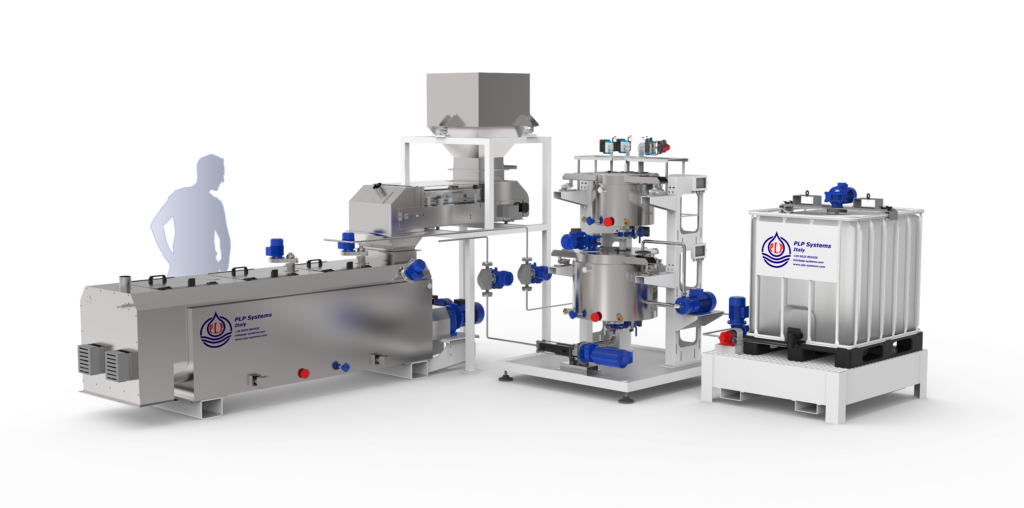
Post-pellet coating technology represents today one of the most interesting solutions for improving the nutritional quality and palatability of animal feed, while simultaneously reducing energy consumption and production process challenges. Traditionally used for the application of fats, oils and palatants in the poultry sector, coating technology is now finding new applications also for the addition of liquid and powdered micro-ingredients directly onto the finished pellet.
Post-pellet coating technology represents today one of the most interesting solutions for improving the nutritional quality and palatability of animal feed, while simultaneously reducing energy consumption and production process challenges. Traditionally used for the application of fats, oils and palatants in the poultry sector, coating technology is now finding new applications also for the addition of liquid and powdered micro-ingredients directly onto the finished pellet.
In the livestock sector, with the exception of poultry feed, the use of post-pellet coating technology has so far been limited. Additives are generally introduced into the mixer before pelletizing; however, during the production process, the feed undergoes mechanical and thermal stresses that may compromise the nutritional characteristics of some sensitive ingredients.
In collaboration with important Italian and European companies, PLP has carried out feasibility tests to apply whey and milk powder directly onto the surface of pellets intended for piglet nutrition. These ingredients are particularly used in formulations for piglets and are normally dosed into the main mixer before pelletizing. However, powdered whey, characterized by its white-yellowish color, high hygroscopicity and tendency to agglomerate forming lumps, creates significant production difficulties when present at high percentages in the formulation.
In addition to process-related issues, pelletizing can cause partial degradation of the heat-sensitive nutrients contained in whey. High temperatures can promote undesirable reactions, such as the Maillard reaction, which modify the organoleptic profile of the product, transforming the typical sweet taste of milk into more bitter notes and reducing its palatability.
To overcome these challenges, PLP Systems has developed an innovative technology that enables the application of heat-sensitive components directly onto the pellet after pelletizing. This solution, called PSPA™ (Post Stress Powder Application), a registered trademark of PLP Systems, represents a new technological platform designed to significantly expand the possibilities for using powders in the feed industry.
In recent years, PLP SYSTEMS has further developed coating applications dedicated to the addition of additives at the end of the production line. On one hand, there has been strong growth in the Pet Food market, where the company has distinguished itself thanks to its technological solutions and the quality of its systems; on the other hand, the feed sector has shown increasing interest in technologies capable of improving pellet quality and reducing the risk of contamination associated with the use of specific additives.
During VICTAM UTRECHT 2026, PLP presented the latest evolution of its MT Continuous Coater machine, designed for the continuous coating of pelletized products intended for the Feed sector and extruded products for Pet Food and Aqua Feed. Among the new features introduced is the RETENTION HATCH, an accessory developed between 2020 and 2021 and subsequently optimized, already installed as standard on several recently manufactured systems.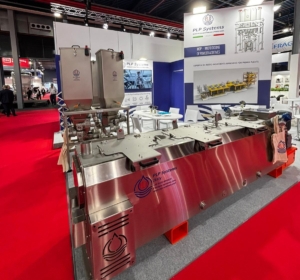
The RETENTION HATCH is positioned near the outlet of the MT machine and consists of product detection sensors, a pneumatically operated multi-position regulating valve, and a dedicated microprocessor for automatic system management. This solution allows the product retention time inside the machine to be increased by up to 300%, improving the absorption of fats and additives inside the pellet or kibble and reducing dripping phenomena.
The increase in retention time also leads to greater uniformity of the treated product, with a significant reduction in the coefficient of variation. The machine gains greater operational flexibility, being able to effectively operate even with wide variations in production rates while maintaining optimal performance at low production capacities. Under these conditions, complete coverage of the mixing shafts is guaranteed, reducing mechanical product breakage and limiting the accumulation of dirt and the formation of lumps caused by atomized additives deposited on mechanical components.
For the application of whey and other sensitive ingredients, PLP has developed two different operating solutions.
The first involves the preparation of a liquid solution composed of whey, water, oil and Seal4Feed. The ingredients are mixed in a dedicated tank until a homogeneous blend is obtained, then accurately dosed and sprayed onto the pellet through the continuous coating machine. This system ensures a uniform distribution of the product and high dosing precision.
The second solution, more recent and innovative, enables the direct application of powders onto the pellet through a dedicated system. The powders are dosed through a loss-in-weight feeding system and conveyed using compressed air through a Venturi effect. The supporting liquid is dosed separately and, thanks to a special nozzle developed by PLP, powder and liquid are mixed immediately before coming into contact with the product to be treated, ensuring an effective and uniform coating.
The results of the tests carried out are particularly significant. In the trials performed, approximately 90% of piglets fed with feed coated with whey and/or milk powder showed a clear preference for the treated product, accompanied by a noticeable increase in weight gain compared with groups fed with traditional feed.
This technology can be applied in all situations where it is necessary to increase feed palatability and improve the nutritional performance of the final product, offering the market innovative and high-value solutions. In addition to nutritional benefits, post-pellet coating also enables significant energy savings, avoiding exposure of sensitive ingredients to the harsh conditions of the pelletizing process.
The same methodology can be extended to the application of numerous other powdered ingredients, such as herring meals, meat meals, hemoglobins and other functional additives, opening new opportunities for the formulation of feeds with high palatability and nutritional value for different animal species.
The automated coating and liquid/powder micro-dosing systems developed by PLP Systems represent a significant step forward, providing concrete improvements in terms of safety, precision and efficiency. In an industrial context increasingly focused on quality and regulatory compliance, the adoption of these technologies represents a strategic choice for the future.
PLP Systems specializes in both liquids and powders, with a special focus on the pet food and feed industries. An important area for PLP is the accurate and precise handling of liquids and powder for pet food and feed production, with a specific focus on post-pellet coating and kibble palatability enhancing.
This process involves adding micro-liquids such as enzymes, vitamins, flavors, probiotics amd yeast to the pellets, aiming to enhance their quality and oils, digest and palatants to kibbles.
Whether you’re looking to improve your current production line or explore innovative methods to increase product appeal, our technologies offer the reliability and excellence you need.
Need more information or want to dive deeper into our systems?
We’re here to provide tailored solutions and answer all your questions.
Call us today at +39 0523 891 629 or email us at info@plp-systems.com for a free consultation.
We’re here to help you find the perfect solution for your needs!
PLP Systems SRL
Strada Provinciale 21, N° 303
29018 Lugagnano Val d’Arda
Piacenza, Italy
P.IVA 01373620333
 PLP Systems at CIPAL 2026: Precision solutions for Pet Food manufacturers